My initial sewing project produced an unattractive outcome. The product developed seam puckering which caused edge fraying that lasted only two days before the entire item fell apart. I dedicated twelve hours to making the dress which I then saw destroyed. My grandmother looked at the dress and told me “Wrong nahttypen for that fabric, honey.” Her words confused me completely.
Five years have passed since that time. Selecting the proper seam type known as nahttypen in German determines whether someone achieves professional results or remains at an amateur level. The same pattern and fabric generate two distinct results because of the different methods used for joining their components.
Understanding Nahttypen and Why They Matter
Nahttypen literally translates to “seam types” from German. These are the various methods for stitching fabric pieces together, each serving specific purposes for strength, flexibility, appearance, or durability.
Think of seams as the skeleton of your garment. Use the wrong technique and everything collapses. Use the right one and your creation withstands years of wear.
Different nahttypen offer distinct advantages:
- Some prevent fraying on delicate fabrics
- Others provide stretch for athletic wear
- Certain types add decorative elements
- Specific seams create extra strength for stress points
The choice impacts both function and aesthetics. A visible flat-felled seam on denim jeans looks intentional and sturdy. That same seam on a silk blouse would look bulky and inappropriate.
The Essential Nahttypen Every Sewist Should Know
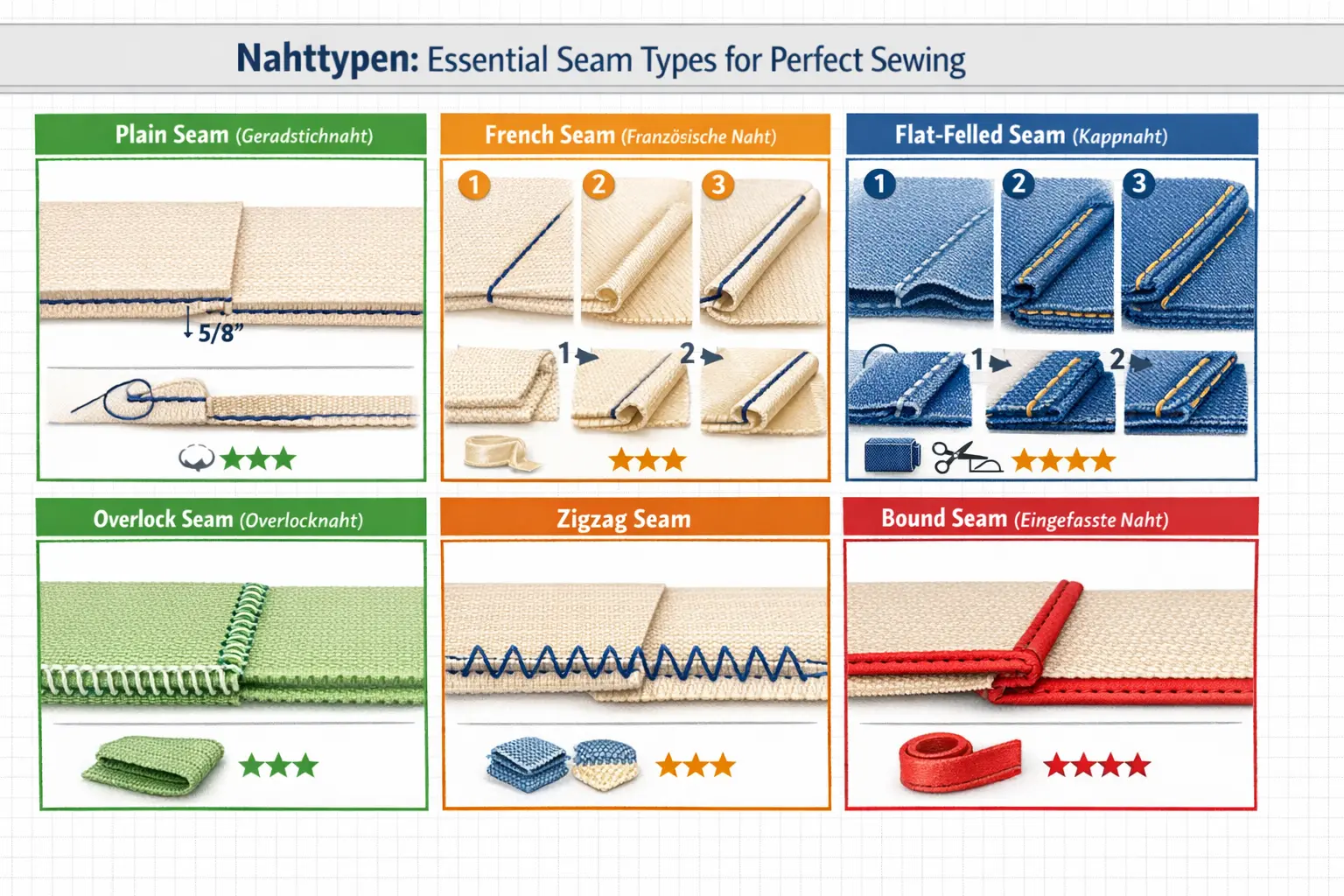
The plain seam serves as the basic starting point for all sewing projects. The procedure requires you to position two fabric pieces with their right sides facing each other then you must sew along the edge before you can press the seam allowance to its open position. The method provides simple results which work efficiently with woven fabrics that include cotton and linen.
French seams revolutionized my work with delicate materials. This double-stitched technique completely encloses raw edges inside the seam itself. The method works best with silk and chiffon and other lightweight fabrics which show damage through fraying. The process requires additional time to complete yet it delivers stylish and long-lasting results.
Flat-felled seams create those distinctive double rows of stitching you see on quality jeans. The raw edges of the fabric get folded over and stitched down which creates strong seams that stop fabric edges from fraying. I use these for any project expecting heavy wear—work shirts, canvas bags, denim anything.
Knit fabrics require overlock seams that a serger machine operates effectively. The machine performs three functions by cutting and stitching while finishing edges in a single operation. The material becomes essential for T-shirts and leggings and athletic wear which require stretch to function properly.
Zigzag seams work when you don’t own a serger. The zigzag pattern enables fabric to stretch while it completes edge finishing. The method provides less professional results than overlocking yet all users can perform it with basic sewing machines.
Matching Nahttypen to Your Fabric Type
The lesson I learned cost me a lot of money. The garment breaks its stitches when I use straight seams on knit fabrics which later stretch.
The plain seam works perfectly for woven fabrics which include cotton linen and denim. The materials do not stretch so straight stitching delivers sufficient strength. Use French seams for lightweight fabrics which have high fraying tendencies.
Flexible seams are necessary for knit and stretchy fabrics. The fabric stretching leads to thread breakage which occurs with zigzag and overlock and specialized stretch stitches. The garment will break at the seams after someone tries it on for the first time.
The sewing process requires seam reinforcement for heavy materials which include canvas and upholstery fabric. Designers need to choose between flat-felled and double-stitched methods to achieve the required strength for handling heavy fabrics. The standard seams will fail because of the pressure which they will experience.
The best seam for delicate fabrics like silk chiffon and organza uses French seams or narrow rolled hems. The techniques create protective barriers for fragile fibers while they keep the special drape which makes these materials unique.
Common Mistakes That Ru
in Otherwise Good Projects
The biggest mistake I see beginners make? Ignoring seam allowances. Weaking seams happens when cutting occurs too near to stitching lines. Leave consistent seam allowances—usually 5/8 inch for garments—to ensure structural integrity.
The pressing step must be completed because it stops all stitching from reaching its full potential. The visual outcome of a project transforms through the process of pressing seams after sewing. The appearance of unpressed seams remains unprofessional because they show wrinkles which hide the actual stitching quality.
Using the wrong thread weight causes problems too. When heavy thread gets used on delicate fabric it produces visible seams which create an unattractive appearance. Heavyweight material needs thin thread because it fails to provide necessary strength. For optimal results you should select thread that matches the weight of your fabric.
The process of finishing raw edges should not be skipped because it protects against fraying problems. Unraveling prevention needs to take place because perfect seams will break apart without proper edge protection. Pinking shears and zigzag stitching and binding provide your work with protection against self-destruction.
The first weak points in seams develop through inconsistent stitch length. The entire project requires you to maintain ongoing control over both tension and length settings according to your fabric requirements.
Decorative and Specialty Nahttypen
The use of bound seams provides practical benefits because they secure unrefined edges through their application of bias tape or different fabric materials. The product serves its purpose because I utilize it on unlined jackets which display their internal seams. The decorative binding establishes a conscious design element which safeguards edges from becoming frayed.
Piped seams incorporate cord covered in fabric strips into seam lines. This technique produces accents which create height differences between two surfaces which designers use in cushion designs and formal wear. The process requires extensive labor because it produces striking visual effects.
Lapped seams require fabric pieces to be positioned in overlapping manner before the stitching process begins. These seams function as standard components of leather crafting and traditional attire because they provide enhanced durability while forming attractive design paths.
Slot seams create an ornamental gap that reveals contrasting material underneath. The technique enables designers to achieve color variation alongside design development by avoiding the need for appliqué techniques.
Tools That Improve Your Nahttypen Results
Sharp fabric scissors create clean cutting results which enable smooth sewing operations. Dull blades create irregular edges which result in excessive fraying and create problems for machine feed dogs.
A quality iron becomes essential for professional-looking seams. Pressing seam allowances open or to one side dramatically improves the finished appearance. Steam settings help set stitches into fabric.
Seam rippers save projects when mistakes happen. Everyone makes errors—having a sharp seam ripper means fixing them without damaging fabric.
The specialized presser feet provide better results for specific nahttypen. Walking feet help feed thick fabrics evenly. Rolled hem feet create tiny finished edges on lightweight materials.
Frequently Asked Questions About Nahttypen
What are nahttypen in sewing?
Nahttypen is the German term for seam types which describe all the methods used to sew fabric pieces together. The different types of stitches provide specific benefits which include various levels of strength and stretchability and different visual effects and material longevity. The selection of appropriate nahttypen for your fabric and project needs will determine the quality of your final work.
Which seam type works best for stretch fabrics?
The best seam protection for stretch fabrics which include jersey and spandex and athletic knits requires the use of overlock and zigzag sewing techniques. The stitches maintain their integrity because they can bend with the fabric movement. The material will stretch until straight stitches break which will damage your work during its first use.
How do I prevent seams from puckering?
Prevent puckering by matching thread weight to fabric, adjusting machine tension correctly, using appropriate needle size, and avoiding pulling fabric while sewing. The machine should operate according to its natural fabric feeding process. Pressing seams after stitching helps to minimize the visible puckering effect.
Can I use regular scissors for cutting seams?
You can, but sharp fabric scissors or rotary cutters produce better results. Regular scissors usually fail to provide sufficient sharpness which prevents them from making proper cuts through multiple fabric layers resulting in ragged edges that excessively fray and become difficult to sew.
What’s the strongest seam type?
The highest seam strength of flat-felled seams supports their use in both jeans production and workwear manufacturing. The double-stitched, folded-over construction results in ultra-strong seams which can handle high stress and multiple laundry cycles.
Do I need a serger for good seams?
People who sew can work without a serger because it is not necessary for their projects. You can make professional overlock seams with sergers but you can also achieve excellent results through regular machines that use zigzag stitches to finish edges and create stretch seams. The ability to use sergers makes sewing easier for users but it does not provide them with any extra functionalities.
How wide should seam allowances be?
Standard garment seam allowances measure 5/8 inch (1.5cm).Specific applications of some patterns require their designers to use 1/2 inch or 1/4 inch measurements. The pattern instructions must be followed because your project requires you to maintain the same width throughout for proper fit and strength.
Taking Your Sewing to the Next Level
Mastering nahttypen transforms sewing from frustrating struggle into satisfying craft. Start by practicing different seam types on fabric scraps before committing to actual projects. The process helps build confidence while showing how different fabrics react to various techniques.
You need to spend time learning all the features your sewing machine can perform. You should study the available stitches and their tension adjustments and learn about the special feet which enhance your nahttypen capabilities. The machine remained inactive for six months until I discoveredoperational elements which brought about a complete revolution.
Analyze your favorite garments by studying their stitching methods. Inside-out garment examination reveals which nahttypen were applied to different parts of the garment. Quality manufacturers choose seams strategically based on stress points, fabric properties, and aesthetic goals.
Create a seam sample collection which uses different fabrics to build your reference collection. Each sample should display nahttypen name and fabric type along with notes about testing difficulties and outcomes. The physical reference system provides better assistance than online tutorials when you need immediate help during your project.
Sewing experts progress through their career because they acknowledge their mistakes. The difference? They know how to fix problems because they understand why specific nahttypen work in certain situations. The knowledge you seek develops through practice and experimentation plus a significant number of unsuccessful seam attempts.
Your sewing journey improves dramatically once you stop viewing seams as mere fabric connections and start seeing them as deliberate choices affecting every aspect of your finished work. Your projects will achieve store-bought quality when you choose nahttypen and execute them properly with controlled execution.