 Hamza Imran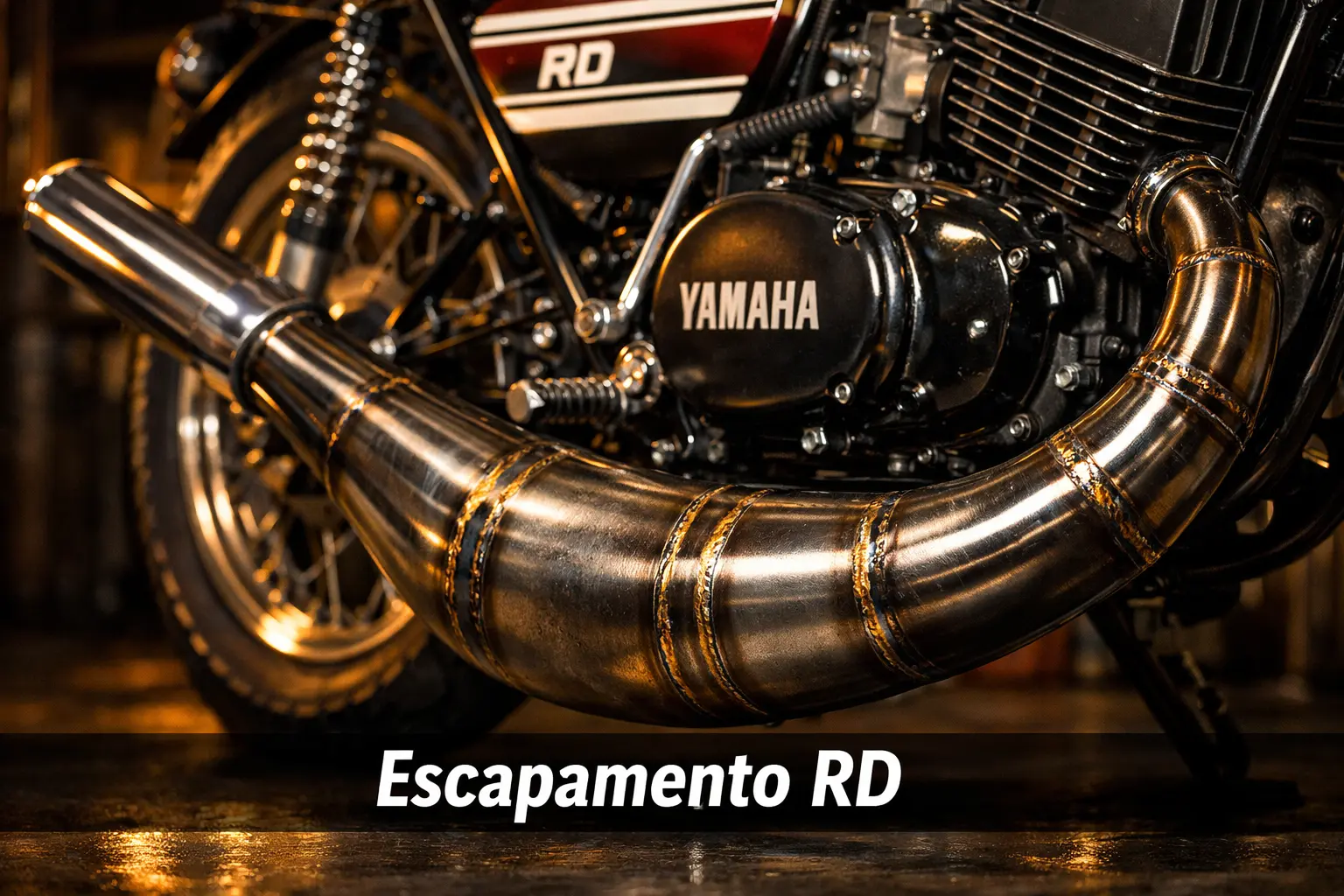
When you twist the throttle on a Yamaha RD motorcycle you will hear a distinctive high-pitched scream which fills the air. The sound originates from a special exhaust system which engineers designed instead of depending on engine capacity. The escapamento RD functions as the one component which creates the difference between a flat ride experience and a ride experience which delivers dynamic control to the rider. The metal component which connects to your frame system generates all audio you perceive while you operate your vehicle through its different driving modes.
Most riders underestimate just how deeply the exhaust system is tied to how a two-stroke engine actually functions. The process of changing an exhaust system on a standard vehicle to achieve a more athletic sound differs from this situation. The RD motorcycle system uses its escapamento to eliminate waste gases while it simultaneously drives the ignition process which determines the engine’s output and torque and throttle responsiveness. The understanding of this system allows better decision-making for upgrades while maintenance time becomes more valuable.
What Is Escapamento RD and Why It’s Different From Regular Exhausts
The escapamento RD refers to the exhaust system specifically engineered for the Yamaha RD series of two-stroke motorcycles, including iconic models like the RD 125, RD 250, RD 350, and RD 400. Unlike a standard four-stroke exhaust that simply routes burned gases away from the engine, the RD’s exhaust system plays an active role in the power production process itself. This distinction is critical and it’s what makes the escapamento RD such a fascinating component to study.
In a two-stroke engine, the intake, combustion, and exhaust processes happen within a single revolution of the crankshaft. This means that at certain moments, the exhaust port and intake port are both partially open at the same time. Without a specially designed exhaust, fresh fuel-air mixture would escape straight out through the exhaust port and be wasted entirely. The escapamento RD solves this problem through a design principle called the expansion chamber, which uses pressure waves to push escaping mixture back into the cylinder before combustion occurs.
This process is often called exhaust scavenging, and it is the reason why RD motorcycles punch so far above their displacement in terms of raw performance. A well-tuned escapamento RD doesn’t just remove exhaust gases — it actively recycles energy within the system and contributes to building cylinder pressure. Riders who switch from a worn or poorly designed exhaust to a properly tuned one often report feeling the difference within the first few kilometers, especially in the mid-range RPM band where two-stroke engines are most sensitive to exhaust tuning.
The Science Behind the Expansion Chamber
To truly understand the escapamento RD, you need to understand the expansion chamber that forms its core. This chamber is not a simple straight pipe — it is a series of precisely calculated cones welded together in a specific geometric progression. The pipe expands outward from the exhaust port and then tapers back inward before reaching the final silencer section. This shape is not aesthetic; every angle and dimension is calculated to control how pressure waves travel within the exhaust.
When exhaust gases exit the cylinder with force, they create a pressure pulse that travels down the pipe. As this pulse enters the wider section of the expansion chamber, it reflects a negative pressure wave — essentially a suction effect — back toward the cylinder. This negative wave arrives at the exhaust port at precisely the right moment to help draw fresh mixture into the combustion chamber more effectively. Milliseconds later, as the exhaust port closes, a positive pressure wave returns from the narrow tapered section and pushes any escaping fuel-air mixture back into the cylinder before it can escape.
The timing of these pressure waves depends on several factors including the length of the pipe, the diameter of the sections, the angle of the cones, and the RPM at which the engine is running. This is why different expansion chambers favor different parts of the power band. A shorter, more aggressive chamber will push power toward the high-RPM range, giving explosive top-end performance but a narrower powerband. A longer chamber tends to move peak power lower in the rev range, producing a broader and more tractable power delivery. Tuners who understand this principle can design an escapamento RD that matches a specific riding style or race application with remarkable precision.
Types of Escapamento RD Available
Not every escapamento RD is built with the same goal, and choosing the right type depends entirely on what you want from your motorcycle. There are three primary categories that riders and tuners work with, and each serves a distinct purpose depending on your priorities.
The stock or original equipment manufacturer exhaust is the first category. This is the factory-fitted exhaust system that Yamaha designed for each specific RD model. For collectors and restorers, this is often the most desirable option because it preserves the bike’s originality and maintains correct performance characteristics across the RPM range. Original Yamaha exhausts for models like the RD 350 have become increasingly rare and carry significant value in the collector market. Riders who want their bikes to look and sound exactly as they did from the factory naturally gravitate toward sourcing or restoring original units.
Aftermarket performance exhausts form the second and most popular category. Brands that specialize in two-stroke performance engineering produce expansion chambers designed to extract more power from the RD engine than the stock system allowed. These systems are typically built from higher-quality materials and tuned to specific RPM ranges. Dyno testing of properly installed aftermarket systems has shown horsepower improvements in the range of 15 to 25 percent compared to worn or stock exhausts, depending on the condition of the engine and carburetor tuning. This category suits riders who want to push their motorcycles harder, whether on the street or on a track.
Custom-fabricated exhausts represent the third category and occupy a special place within the RD community. Skilled fabricators and two-stroke tuners build these systems by hand, often using computer simulation software to model gas flow and resonance characteristics before cutting a single piece of metal. Custom exhausts allow for perfect matching between the exhaust geometry and a specific engine’s porting, carburetor setup, and intended RPM range. They are more expensive than aftermarket options but can produce performance results that exceed off-the-shelf solutions when built correctly.
Materials and Build Quality: What the Escapamento Is Made Of
The material used to build an escapamento RD affects everything from weight and corrosion resistance to heat management and longevity. Riders choosing an exhaust need to understand these material differences because they directly influence both performance and maintenance requirements over the life of the system.
Mild steel is the most common and affordable material used in escapamento RD construction. It is easy to weld and shape, which makes it suitable for both factory production and custom fabrication. The downside of mild steel is that it requires regular maintenance to prevent rust and corrosion, particularly in humid climates or for bikes stored outdoors. Manufacturers often apply high-temperature paint or chrome plating to mild steel exhausts to slow oxidation, but these coatings degrade over time with repeated heat cycles. A mild steel escapamento that is cleaned and protected after every ride can last many years, but a neglected one will show rust quickly.
Stainless steel offers significantly better corrosion resistance and handles heat cycles more gracefully than mild steel. It costs more to purchase, but the reduced maintenance requirements and longer service life often justify the price difference for riders who use their motorcycles regularly. Stainless exhausts retain their appearance with less effort and are less likely to develop stress cracks at weld joints over time. For riders in coastal areas or regions with high humidity, stainless steel is often the smarter long-term investment.
Titanium represents the premium end of the material spectrum. It offers an exceptional strength-to-weight ratio, and an escapamento RD built from titanium can be significantly lighter than an equivalent mild steel system. That weight reduction contributes to better handling balance and slightly improved acceleration due to reduced unsprung weight. Titanium exhausts are typically reserved for serious racing applications where every gram matters and budget constraints are less of a concern. For most street riders and enthusiasts, stainless steel provides the best balance between performance, longevity, and cost.
How Escapamento RD Affects Sound and Riding Experience
The sound produced by a properly tuned escapamento RD is unlike anything else in the motorcycle world. Two-stroke engines have a characteristic auditory signature — a sharp, rising scream that intensifies as the RPMs climb — and the expansion chamber amplifies and shapes this into something that riders find deeply satisfying. Many RD enthusiasts describe the sound as one of the primary emotional reasons they continue riding and restoring these machines decades after they were manufactured.
The acoustic character of the exhaust depends on the length and volume of the expansion chamber, the diameter of the outlet pipe, and the silencer design used at the end of the system. A large-volume expansion chamber with a longer outlet produces a deeper, more resonant tone. A tighter, shorter system with a small silencer generates a sharper and more aggressive bark. Neither is objectively better — they simply serve different preferences and different regulatory environments. Riders competing at tracks with noise limits need to balance performance gains against sound output levels, while those riding on private land or in jurisdictions without strict noise laws have more freedom to chase the most aggressive sound possible.
Beyond the acoustic experience, the escapamento RD shapes the emotional connection between a rider and the machine in ways that are difficult to quantify. When the engine crosses into the powerband and the exhaust note transforms from a moderate hum into a full-throated scream, the acceleration builds simultaneously and the sensation becomes deeply physical. Long-time RD riders often describe specific exhaust setups as feeling like the bike is a living thing responding to their inputs rather than a mechanical device being operated. That emotional dimension is why the escapamento RD occupies such a central place in the culture surrounding these motorcycles.
Carburetor Tuning After Installing a New Escapamento
One of the most common and costly mistakes riders make after installing a new escapamento RD is failing to retune their carburetor. This oversight can actually cause engine damage over time, and it also prevents the rider from realizing the full performance potential of the new exhaust system. Understanding why retuning is necessary helps riders approach this step with the right mindset and avoids expensive problems down the road.
When you change the exhaust system, you change the flow resistance and pressure wave characteristics of the entire engine’s breathing system. The carburetor’s original jetting was calibrated to work with a specific exhaust setup. A new expansion chamber alters the fuel-air mixture requirements of the engine, typically requiring a slightly richer main jet to prevent the engine from running lean at high RPMs. Running a two-stroke engine lean — meaning with too little fuel in the mixture — generates excessive heat in the cylinder and piston, which can cause seizure damage in a very short period.
The retuning process involves starting with the manufacturer’s recommendations for the new exhaust, then making small adjustments to the main jet, needle position, and pilot jet while monitoring how the engine runs at different throttle positions and RPM ranges. Experienced tuners often use plug chops — a technique where the rider runs the engine at full throttle for a set distance, then cuts the throttle and stops the engine to examine the spark plug color — to assess the mixture quality. A light tan plug indicates a correct mixture, while a white or washed-out electrode signals a lean condition that requires a larger main jet.
Maintenance and Care for Long-Lasting Performance
Proper maintenance of your escapamento RD is not complicated, but it does require consistency to keep the system performing at its best. Neglecting an exhaust system is one of the fastest ways to watch power and reliability decline on an RD motorcycle, and most maintenance tasks require nothing more than basic tools and a short amount of time after each ride or at regular intervals.
Cleaning the exterior of the exhaust after every ride prevents road grime, moisture, and salt from beginning the corrosion process. A soft cloth removes surface contamination before it can bond to the metal surface. For more stubborn deposits, a cleaner specifically formulated for high-temperature exhaust surfaces removes carbon buildup without damaging protective coatings. Chrome exhausts benefit from regular polishing with a chrome-specific product that removes surface oxidation and restores a protective barrier against moisture.
Inspecting mounting hardware every few weeks is equally important. The constant vibration of a running two-stroke engine works at bolts and mounting springs over time, and a loose exhaust mount causes the system to rattle against the frame or swing arm. Beyond being annoying, a loose exhaust can crack at weld joints when subjected to the flexing forces of vibration, turning a minor maintenance issue into a component failure. Checking that all mounting points are tight and that rubber isolators are in good condition takes only a few minutes but prevents expensive problems.
The silencer packing inside the muffler section absorbs sound and influences exhaust back pressure. Over time, typically after around 10,000 kilometers of riding, this packing material breaks down and loses its effectiveness. When it deteriorates, the exhaust note changes and the back pressure characteristics shift in ways that affect engine tuning. Replacing the silencer packing at regular intervals maintains consistent performance and keeps the exhaust note sounding as intended.
Choosing the Right Escapamento RD for Your Goals
Selecting the right escapamento RD begins with an honest assessment of what you want to accomplish with your motorcycle. Riders with different goals need fundamentally different exhaust characteristics, and purchasing the wrong system wastes money while delivering disappointing results. Thinking clearly about your priorities before shopping saves time and ensures a better outcome.
If your goal is authentic restoration, sourcing an original exhaust unit or a high-quality reproduction that matches factory specifications is the right path. This approach preserves the motorcycle’s collector value, maintains the original power curve that the engine was designed around, and avoids the need for carburetor retuning. It’s also the most historically accurate approach for riders who want their RD to represent a specific era of motorcycle history.
If maximum performance is your priority, an aftermarket expansion chamber from a reputable two-stroke performance manufacturer is the appropriate choice. These systems are typically designed with specific RD models in mind and come with tuning recommendations for carburetor jetting adjustments. Before purchasing, researching feedback from other RD riders who have used the same system on the same engine combination gives you realistic expectations about the power gains and the RPM range where those gains appear.
For riders who are deeply involved in the RD community and want a truly optimized system, working with a skilled fabricator to build a custom expansion chamber produces the best possible results. This route requires the most investment in terms of time and money, but it allows the exhaust to be tuned precisely to your engine’s specific porting dimensions, your carburetor setup, and your preferred riding RPM range. Riders who pursue this path often describe the result as transformative for the motorcycle’s character.
Conclusion
The escapamento RD is far more than a component you bolt onto a motorcycle and forget about. It is an engineering system that actively shapes the engine’s combustion process, defines the acoustic identity of the machine, and connects the rider to decades of two-stroke performance heritage.
- The expansion chamber works with engine physics to recycle pressure waves and increase cylinder filling.
- Choosing the right material — mild steel, stainless, or titanium — affects longevity and maintenance needs.
- Aftermarket exhausts can deliver 15 to 25 percent more horsepower when properly installed and tuned.
- Carburetor retuning after installation is essential to protect the engine and unlock full performance.
- Consistent maintenance of mounts, packing, and surfaces keeps the system performing reliably for years.
Start by assessing the condition of your current exhaust and identifying whether wear or damage is already costing you power. From there, choose an upgrade path that matches your restoration or performance goals, budget your carburetor tuning work alongside the exhaust purchase, and commit to a simple maintenance routine. Your escapamento RD will reward that attention with every ride.
Frequently Asked Questions
What is escapamento RD?
Escapamento RD is the specialized exhaust system designed for Yamaha RD series two-stroke motorcycles. It uses an expansion chamber design to control pressure waves inside the exhaust pipe, which actively improves engine combustion efficiency and increases power output beyond what a simple exhaust pipe could achieve.
How does the expansion chamber in escapamento RD work?
The expansion chamber creates timed pressure waves that travel through the exhaust. A negative wave draws fresh mixture into the cylinder more effectively, while a returning positive wave pushes escaping fuel-air mixture back before the exhaust port closes. This cycle is called exhaust scavenging and is central to two-stroke performance.
Does installing a new escapamento RD increase horsepower?
Yes. Dyno-tested results from properly installed aftermarket escapamento RD systems show gains of 15 to 25 percent in horsepower compared to worn or stock exhausts. The actual gain depends on the engine’s condition, the carburetor tuning performed after installation, and the specific exhaust model chosen.
Do I need to retune my carburetor after changing the escapamento RD?
Yes, carburetor retuning is essential. A new exhaust changes the air-fuel mixture requirements of the engine. Running without retuning can cause the engine to run lean at high RPMs, which generates excessive heat and risks piston seizure. Always adjust jetting according to the new exhaust manufacturer’s recommendations.
What materials are used in escapamento RD construction?
The three main materials are mild steel, stainless steel, and titanium. Mild steel is affordable but requires regular rust prevention maintenance. Stainless steel offers better corrosion resistance with less upkeep. Titanium is the lightest and most durable option but is typically reserved for high-end racing applications due to cost.
How often should I maintain my escapamento RD?
Clean the exterior after every ride to prevent corrosion. Check mounting hardware every few weeks to ensure nothing has loosened from engine vibration. Replace the silencer packing approximately every 10,000 kilometers to maintain consistent sound and back pressure characteristics within the exhaust system.
Is escapamento RD street legal?
It depends on your local regulations. Many performance expansion chambers produce sound levels that exceed limits set by traffic law in urban areas. Some systems come with homologation certificates confirming street-legal compliance. Always check local noise and emissions regulations before installing an aftermarket escapamento RD for road use.