
 Hamza Imran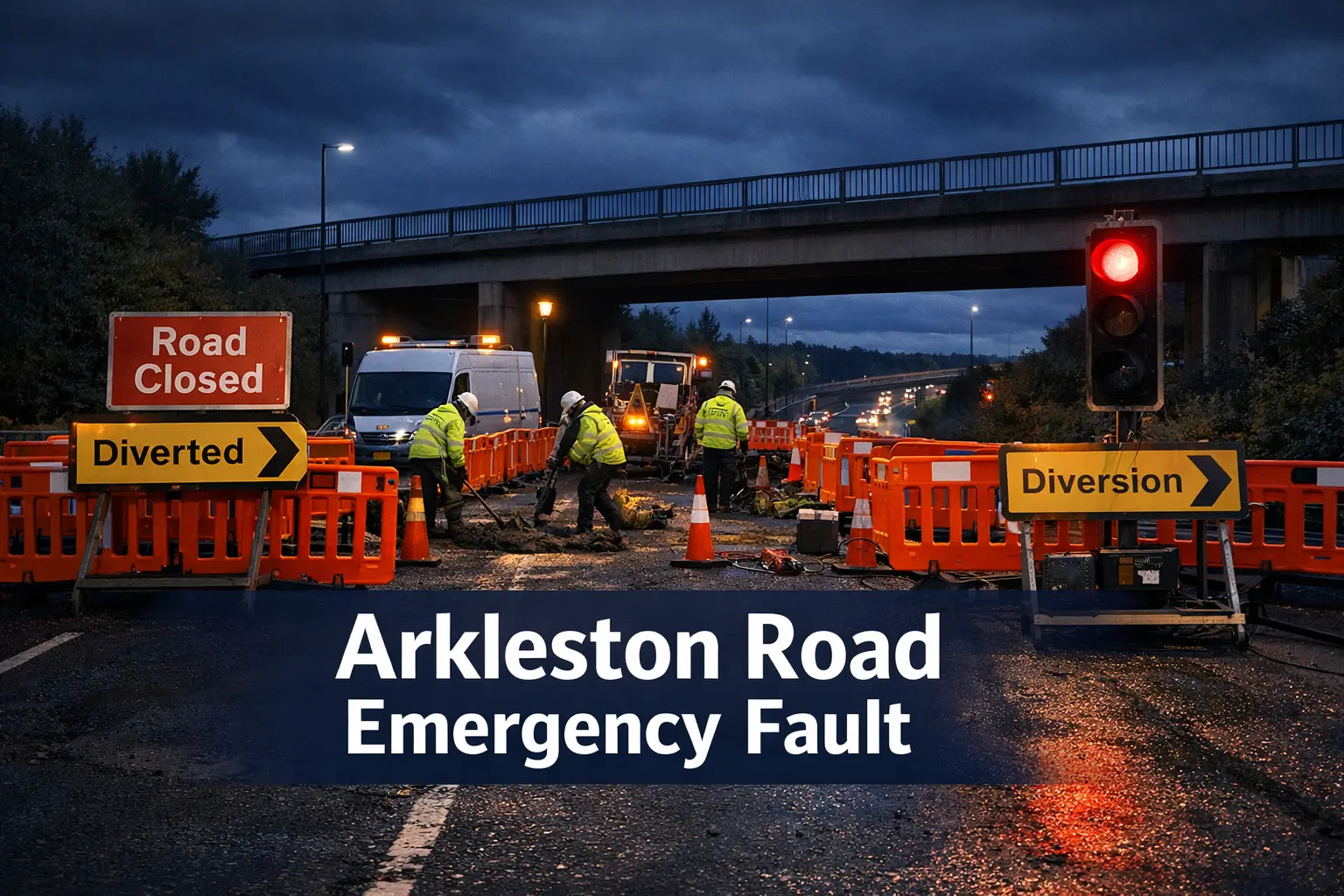
The road closures which occurred during the year disrupted traffic flow through the road which thousands of commuters used for their daily travels on three separate occasions. The entire community of Renfrew experienced constant disruption during the entire year of 2025 because of the Arkleston Road construction project which still affects drivers until the current date of 2026. Drivers who use this route between Paisley and Renfrew on a regular basis will understand the experience of frustration which comes from this situation. People faced multiple problems which included waiting in long lines and taking detours while they tried to determine when normal operations would resume.
The article presents a complete report which details all events associated with the Arkleston Road Renfrew emergency fault and includes information on official responses and driver alternatives and the time frame needed to achieve a permanent resolution.
What Is the Arkleston Road Renfrew Emergency Fault
Arkleston Road is a key connecting route in Renfrewshire that links residential areas around Renfrew and Paisley to the M8 motorway at Junction 27. It serves commuters heading to Glasgow, drivers accessing Glasgow Airport, and residents traveling between neighboring communities. The road passes near David Lloyd Health Club, Arkleston Cemetery, and several local businesses.
The term “emergency fault” in this context refers to a series of unplanned infrastructure failures that required urgent repairs and caused temporary road closures. These faults were not routine roadworks scheduled in advance. They were reactive situations demanding immediate action from multiple authorities, including Renfrewshire Council, Scottish Power, and Police Scotland.
Three separate incidents contributed to what became a prolonged period of disruption along this route throughout 2025. Each one was different in nature, but together they created a compounding problem that extended disruption far beyond what any single incident would have caused on its own.
The Three Major Incidents That Shut Arkleston Road in 2025
Flooding Damage in February 2025
The first closure of the year happened in February when severe weather struck the Renfrewshire area. Heavy rainfall caused significant flooding along a section of Arkleston Road between Mossland Road and Arkleston Cemetery. The water accumulation was serious enough to damage the road surface itself, not just create temporary inconvenience for drivers passing through.
Renfrewshire Council closed that section for approximately 28 days while repair crews assessed the damage and completed the necessary resurfacing work. For a road that carries high volumes of daily traffic, a month-long closure is a significant event. Residents and businesses near the affected stretch had to adapt quickly, and many were left frustrated by the lack of prior warning that comes with weather-related emergencies.
This early closure set the tone for what would become a difficult year on this route. It also highlighted how the road’s existing condition and drainage infrastructure were not well-equipped to handle extreme weather events of that scale.
Bridge Strike Incident on June 4, 2025
The second and arguably most serious incident occurred on the afternoon of June 4, 2025. A lorry carrying a heavy load struck the bridge on Arkleston Road that crosses over the M8 motorway at Junction 27. The collision happened at approximately 2:50 in the afternoon, during a period of active traffic flow on both the road above and the motorway below.
The impact caused visible structural damage to the bridge, prompting an immediate emergency closure. Police Scotland sealed off Arkleston Road at Junction 27 and also closed the M8 westbound carriageway for several hours to allow recovery crews to clear debris from the motorway lanes below. Traffic Scotland reported delays of close to 30 minutes on the motorway approaches as a result.
The structural assessment that followed was thorough and time-consuming. Transport Scotland initially projected a closure of up to six months to allow for full safety evaluation and structural repairs. Engineers later identified a solution that allowed one lane to reopen with temporary traffic lights in place, and that partial reopening happened on June 27, 2025. However, the single-lane system with controlled traffic signals remained in place beyond that date and continues to create rush-hour queues that drivers on this route know all too well.
Scottish Power High-Voltage Cable Fault in July 2025
Just weeks after the bridge situation was partially resolved, Arkleston Road faced a third closure. On July 11, 2025, Scottish Power notified Renfrewshire Council of an emergency fault discovered in underground high-voltage cables running beneath the road near the M8 bridge. The damage to the cables required urgent replacement rather than a simple repair.
Renfrewshire Council issued a road closure order covering the section from David Lloyd Health Club to 137 Arkleston Road. The closure lasted up to 10 days while engineers worked to replace approximately 300 metres of damaged underground cable. Renfrewshire Council issued traffic orders to keep vehicles out of the active work zone, and emergency access was maintained throughout the process.
Ralston Community Council played an important role during this period by keeping local residents informed through regular updates on closure timelines and available diversion routes. Their communication helped reduce some of the confusion that tends to build up when a road closes without much advance warning.
How the Community Was Affected
The impact of the Arkleston Road Renfrew emergency fault stretched well beyond simple traffic delays. Residents living along or near the road found that diverted traffic was being pushed through smaller residential streets, increasing noise, congestion, and pedestrian safety concerns in areas that were not designed to handle that volume of vehicles.
Local businesses along the affected stretch reported reduced footfall during each closure period. When customers can’t easily access a location, revenue suffers regardless of how good the product or service on offer might be. Delivery vehicles and service providers also had to reroute, adding time and cost to everyday operations.
Arkleston Cemetery remained accessible throughout the Scottish Power closure by using an entrance on the opposite side of the closed section. That detail matters a great deal to families who had funeral services or needed to visit graves during those 10 days. David Lloyd Health Club similarly maintained access from Renfrew Road, allowing members to continue using the facility.
The cumulative nature of three closures in a single year took a genuine toll on community confidence in the route’s reliability. People who commute daily began factoring in extra time as a buffer, not because of a single incident but because the road had demonstrated a pattern of being unpredictable.
Diversion Routes Available to Drivers
When Arkleston Road is closed or operating under restricted conditions, authorities typically sign diversion routes to help drivers navigate around the affected section. The most commonly used alternatives involve Renfrew Road and Gallowhill Road, which allow traffic to bypass the closed portion and rejoin Arkleston Road further along the route.
For longer diversions, the following alternatives have been used during past closures. Glasgow Road combined with Incle Street and Weir Street provides a route into central Paisley before reconnecting via Abercorn Street and Niddry Street toward Renfrew Road. Drivers heading toward Glasgow Airport or the M8 interchange at Junction 27 from the Renfrew direction have also used back routes through the Gallowhill area.
Navigation apps such as Google Maps and Waze will generally suggest faster alternatives in real time based on current congestion data. Checking Traffic Scotland’s live updates before setting off is always a practical step when traveling through this area, particularly during peak hours when the single-lane traffic light system at the bridge creates the longest queues.
Emergency service vehicles have maintained access throughout all three closure periods under the terms of the road closure orders issued by Renfrewshire Council. That access priority is standard procedure in any emergency road closure situation across the United Kingdom.
When Will Arkleston Road Fully Reopen
This is the question on the mind of every regular driver along this route, and the honest answer is that a full return to normal is still some time away. Based on information available in early 2026, permanent structural repairs to the bridge damaged in the June 2025 strike are not expected before May 2026 at the earliest. Some projections place full restoration as late as 2027.
Several factors are extending the timeline. Ongoing works on the M8 at Hillington are limiting the available working window for contractors operating near Junction 27. There are also scheduling considerations tied to major events in the area that restrict the types and duration of road works that can take place on key arterial routes.
The temporary traffic lights and single-lane operation that were installed in late June 2025 as a short-term measure have become a semi-permanent feature of this stretch of road. Seven months after the bridge strike, that system remains in place. Drivers traveling between Paisley and Renfrew, or accessing the M8 at Junction 27, should continue to plan for delays during morning and evening rush hours.
Renfrewshire Council and Transport Scotland continue to assess options for accelerating the repair schedule, but the structural complexity of bridge work means that cutting corners is not a viable option. Safety has to come first, even when the timeline is frustrating for those living and working nearby.
What Emergency Faults Like This Reveal About Infrastructure
The sequence of events on Arkleston Road in 2025 is not unique to Renfrewshire. Roads across the United Kingdom face similar challenges when aging underground infrastructure, weather-related damage, and vehicle-caused incidents collide in a short timeframe. The high-voltage cable fault that Scottish Power discovered was not the result of a single dramatic event. It was the kind of gradual degradation that happens beneath busy roads over years of use, pressure, and changing soil conditions.
Bridge strikes are a persistent problem on UK roads. They tend to occur when drivers of tall vehicles fail to observe or disregard height restriction signs. The bridge at Arkleston Road crosses directly over an active motorway, which makes any structural compromise particularly serious. The immediate closure and extended assessment process that followed the June 2025 strike were entirely appropriate responses given the potential consequences of a weakened bridge over a high-speed road.
The flooding in February pointed to drainage infrastructure that needs upgrading to handle increasingly heavy rainfall events. That is a challenge shared by many local authorities across the country as climate patterns shift and extreme weather becomes more frequent. Reactive repairs after flood damage are always more expensive and disruptive than proactive drainage improvements made in advance.
Conclusion
Arkleston Road in Renfrew has had one of the most disrupted years of any local route in Renfrewshire, with three separate emergency closures affecting drivers from February through July 2025. The causes ranged from flooding and a serious bridge strike to an underground high-voltage cable fault reported by Scottish Power. Each incident required a different response, but all three combined to create months of congestion, diversions, and uncertainty for commuters, residents, and businesses in the area.
The single-lane traffic light system at the bridge remains in place into 2026, and full structural repair is not expected before late 2026 at the earliest. Planning your journey in advance, checking live traffic updates, and allowing extra time during peak hours are the most practical steps you can take right now. The Arkleston Road Renfrew emergency fault situation is a reminder of how quickly aging infrastructure can create serious disruption when multiple problems overlap in a short period of time.
Frequently Asked Questions
What caused the Arkleston Road Renfrew emergency fault?
The emergency fault was caused by a damaged underground high-voltage cable discovered by Scottish Power on July 11, 2025. Engineers replaced approximately 300 metres of cable over a 10-day period. This was one of three separate incidents that affected the road during 2025, alongside winter flooding and a bridge strike.
How long was Arkleston Road closed during the Scottish Power fault?
The road was closed for up to 10 days. The closure ran from David Lloyd Health Club to 137 Arkleston Road while underground cable replacement work was carried out beneath the road surface.
Is Arkleston Road still closed in 2026?
The road is partially open with a single lane and temporary traffic lights near the bridge at Junction 27. Full reopening with both lanes restored is not expected before late 2026 or early 2027 due to ongoing bridge repair work.
What diversion routes are available when Arkleston Road is closed?
The main diversion uses Renfrew Road and Gallowhill Road to bypass the affected section. For longer detours, drivers can use Glasgow Road and Incle Street to route through central Paisley. Navigation apps will also provide live alternative route suggestions based on current traffic conditions.
Who was responsible for managing the Arkleston Road emergency closure?
Renfrewshire Council issued the formal road closure orders and managed traffic management. Scottish Power handled the underground cable repair. Ralston Community Council communicated updates to local residents. Police Scotland responded to the bridge strike incident in June 2025.
Why is the bridge repair taking so long?
Bridge repairs over active motorways require detailed structural engineering assessments, specialist contractors, and carefully planned working windows to avoid closing the motorway below. Additional scheduling factors including nearby M8 works at Hillington have pushed the expected completion date to late 2026 or beyond.
What should drivers do before traveling on Arkleston Road?
Check Traffic Scotland’s live traffic information before setting off, allow extra time during morning and evening rush hours, and consider using navigation apps that update in real time. The single-lane system at the bridge creates queues that can extend significantly during peak travel periods.